




Sew Far Sew Good
 2025/12/21

 1119
1119
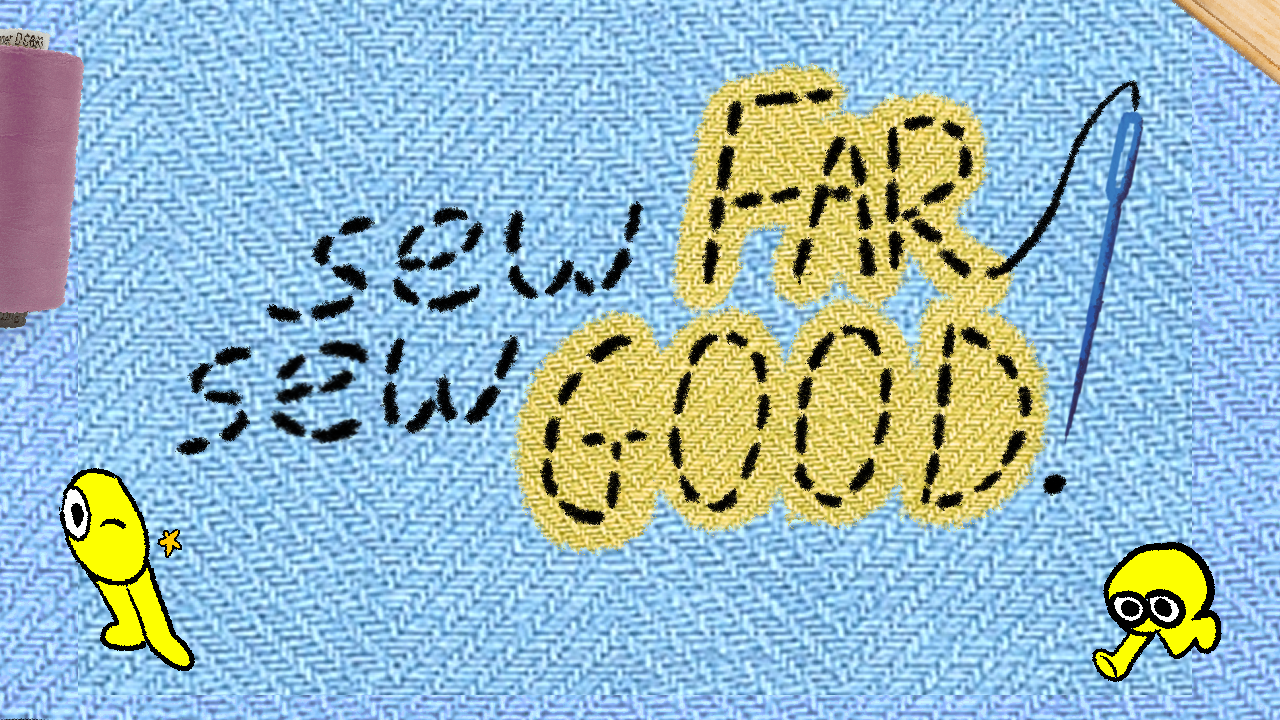
At the November 2025 edition of the Grow UP! Game Jam, I teamed up with a group of 6 others game devs to build Sew Far Sew Good, my first Game Jam game in over 10 years!
Grow UP! is an in-person game jam hosted locally in Vancouver, that partners with local non-profits to bring awareness to their causes through game jams. I first heard about it during Full Indie’s annual summit, and attended their November iteration.
For their November iteration, they partnered with 2 non-profits:
- Our Social Fabric is a non-profit fabric store that sells donated fabrics and fibre arts supplies, helping keep ‘waste’ fabric out of the landfill. They’ll sell to anyone with an interest in sustainable sewing supplies, including the fibre arts and slow-fashion communities.
- SPEC Repair Café is a monthly event hosted by the Society Promoting Environmental Conservation, inviting the public to bring their items in need of repair for free support in mending, repairing, and fixing their items. From bikes, to clothing, to computers, they offer free support in cooperation with the City of Vancouver to help keep waste out of landfills.
An aside: the City of Vancouver has recently cut funding to the SPEC and various sustainability and arts programs by the way of Ken Sim’s ‘Zero means Zero’ budget cratering funding for a wide array of social services, to support a zero-percent property tax increase and a $50 million budget increase for the Vancouver Police Department. Let city councillors know how much this sucks via their website.
A week prior to the event, they announced the theme this time around would be mending, and, to me, that immediately screamed “sewing”. The first night of the event, Friday, was focused on brainstorming and team building. We did a group brainstorming project, where everybody was contributing to an ideas board, what exactly “mending” meant to them. Once there were lots of ideas percolating, people started to group up to begin collaborating.
I proposed an idea based on my understanding that fabric scissors, for cutting fabrics and textiles, are fragile and prone to nicks when used to cut things other than their intended use. What if we had a game where the goal was to carefully cut and sew patches over holes, trying to ensure you didn’t damage your scissors, while moving speedily to complete the repair? This idea eventually evolved to be the basis of Sew Far Sew Good.
I ended up with a team of ~7 in total, including 3 programmers, 2 2D artists, a producer, and an SFX artist. Initially, it sounded a bit like there might be too many cooks, but our devs were either new to gamedev (me) or new to the tooling, meaning we’d be focused on building something fairly small scoped, and hopefully wouldn’t trample on each other’s work too much. Our 2D artists, producer, and SFX artist also found themselves collaborating with multiple teams, or working on their own games on the side, and I think that made for a nice balance, where everybody could find time to contribute to Sew Far Sew Good, and otherwise focus on their own thing.
Overall, the weekend went by quickly, with our team regrouping Saturday morning to kick off game development. By early Saturday, we hadn’t actually fully settled on a game to build… Those of us that arrived earliest started familiarizing ourselves with the tooling of Godot, and just generally working on what we wanted, not fully committed to collaborating. When our producer showed up, they brought up some of the ideas we had had the night before, and suggested we settle on one that seemed approachable, tightly scoped, and fun enough to play. A new Godot project was created, and we were off.
My focus in the game was on the character’s movements. I worked on keyboard controls, as well as programming the animations one of our artists delivered. Looking back, the work was really simple in the end, and the code reflects that. But with it being my first real foray into Godot, it took me most of Saturday to get just a basic character walking animation working!
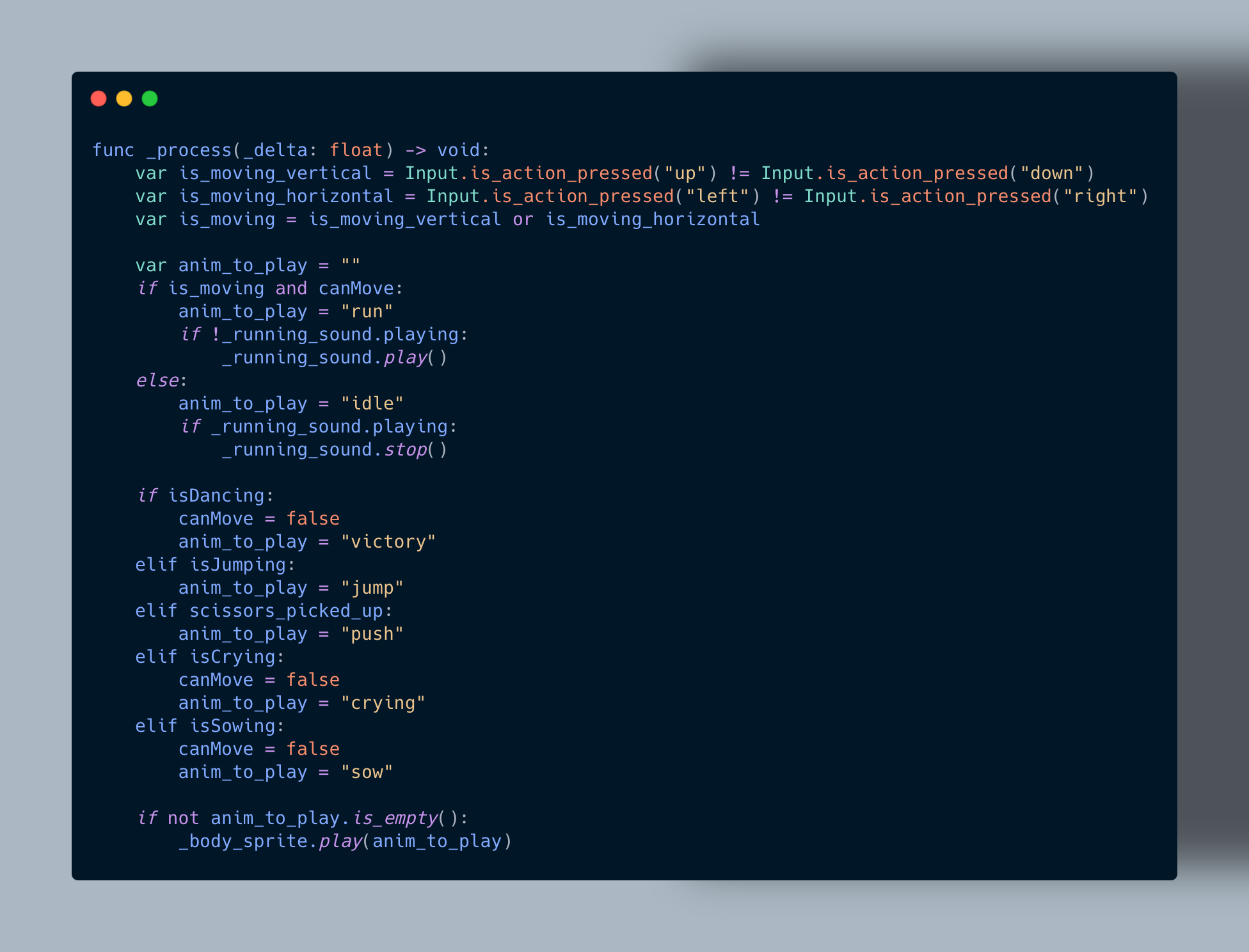
This screenshot constitutes most of Saturday’s work! As you can see, besides some other variables being set by signals elsewhere in the code, it isn’t very complex at all. But bumbling through this was a fun challenge perfectly sized for my absolutely beginner Godot skills.
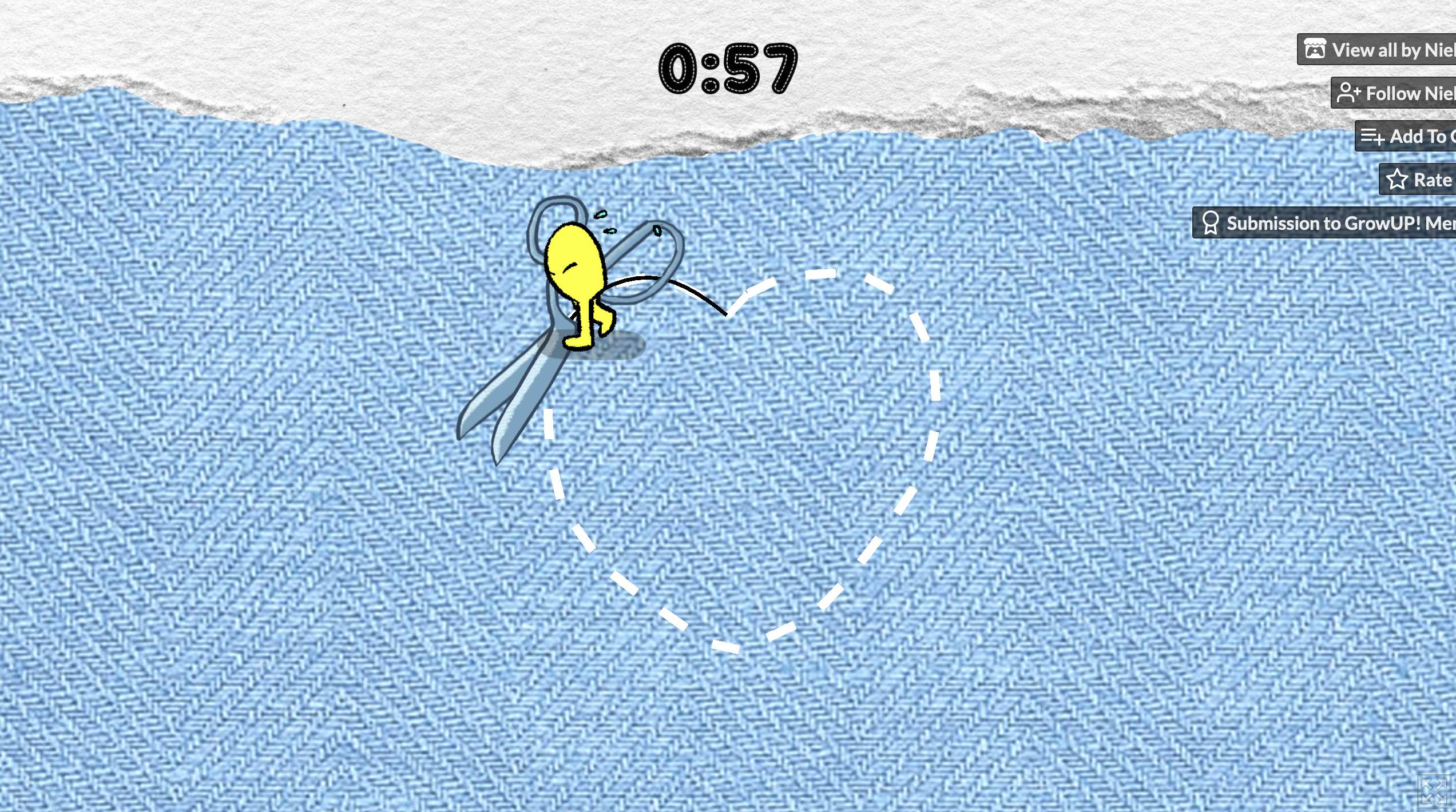
The team managed to get a solid demo by Saturday night, and most of Sunday was spent refining, and expanding. We added a couple more shapes to our game, we cleaned up the menus, and I worked on an algorithm to generate sewing points around the patches to randomize the gameplay a little bit.
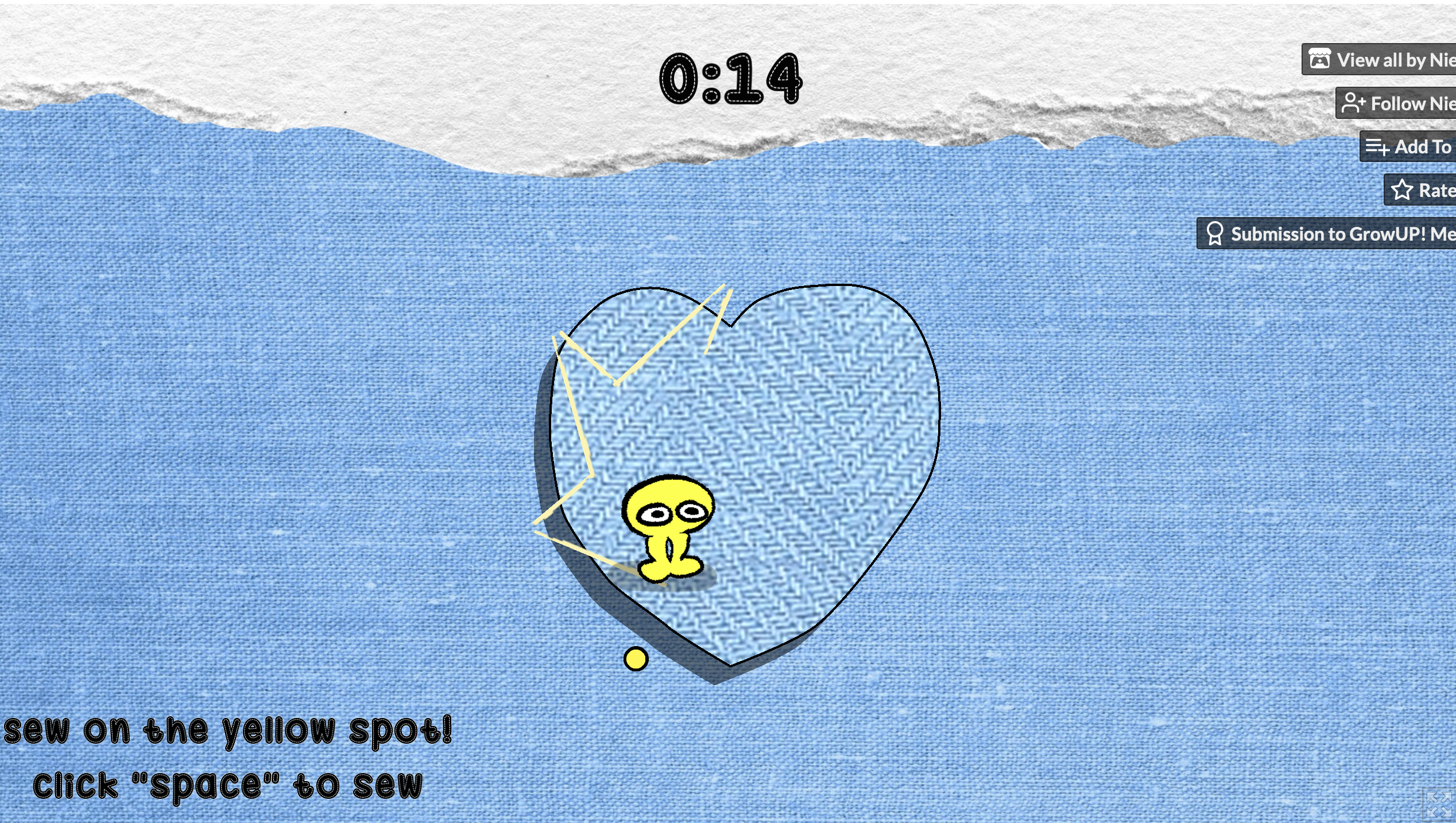
By the end of Sunday, I’m proud to say, we had a fully playable + complete game! With 3 different shapes, and an overall accuracy report at the end of the game.
Overall, I’m really satisfied with what we accomplished. We managed to scope out a simple game perfectly sized for the weekend and skills that we had as a team. We collaborated effectively, finding things for everybody to do, and helping each other when we got stuck on a tricky bit of code, or tough interaction.
Despite feeling a bit overwhelmed at the start of the weekend, by Sunday I was getting really comfortable with Godot. It’s been an incredible tool, and was so easy to learn thanks to their detailed documentation.
You can play the game here.